
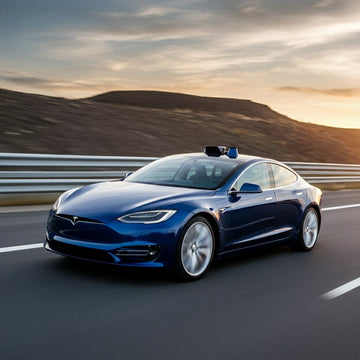
Tesla FSD V14 Introduit une Surveillance du Conducteur Réduite
Dans une mise à jour significative pour les propriétaires et les passionnés de Tesla, l'entreprise a annoncé le lancement prochain de sa version 14 de la Conduite Entièrement Autonome (FSD), qui présentera un changement notable dans son système de surveillance du conducteur. Cette mise à jour vise à améliorer l'expérience de conduite en réduisant le niveau de surveillance requis des conducteurs lors de l'utilisation de la technologie FSD.
Comprendre la Technologie FSD de Tesla
La capacité de Conduite Entièrement Autonome de Tesla a fait l'objet de discussions et de débats considérables au sein de l'industrie automobile. Conçue pour activer les fonctionnalités de conduite autonome, la FSD a subi de nombreuses mises à jour depuis sa création. Avec chaque version, Tesla s'est efforcée de raffiner sa technologie et d'améliorer l'expérience utilisateur. L'introduction de la FSD V14 est une étape supplémentaire dans cette évolution continue.
Quoi de Neuf dans la FSD V14 ?
La fonctionnalité la plus discutée de la prochaine FSD V14 est la réduction des exigences de surveillance du conducteur. Historiquement, les véhicules Tesla équipés de la FSD exigeaient des conducteurs qu'ils gardent leurs mains sur le volant et leurs yeux sur la route, une mesure destinée à assurer la sécurité et la conformité aux réglementations. Cependant, avec cette nouvelle version, on s'attend à ce que les conducteurs aient plus de liberté pour interagir avec la technologie sans surveillance constante.
Implications de la Surveillance du Conducteur Réduite
Ce changement a suscité diverses réactions parmi les experts de l'industrie et les utilisateurs de Tesla. Les partisans soutiennent qu'une surveillance réduite améliorera l'expérience de conduite, permettant aux utilisateurs de faire davantage confiance au système et potentiellement de favoriser une plus grande adoption des technologies de conduite autonome. Comme l'a noté un utilisateur de Tesla, « C'est un tournant pour la façon dont nous interagissons avec nos voitures. On a l'impression que nous nous dirigeons enfin vers une véritable autonomie. »
À l'inverse, les critiques expriment des préoccupations concernant les implications potentielles pour la sécurité. Le maintien d'un engagement approprié du conducteur a été un aspect critique de la philosophie opérationnelle de Tesla, et la réduction de la surveillance pourrait entraîner des lapsus d'attention lorsque le véhicule est en mode d'automatisation. Comme l'a souligné Jane Doe, défenseur de la sécurité, « Bien que les avancées technologiques soient excitantes, elles ne doivent pas se faire au détriment de la sécurité du conducteur. » Ce sentiment souligne l'équilibre délicat que Tesla doit atteindre entre innovation et sécurité.
Améliorations Technologiques
Outre la surveillance réduite du conducteur, la FSD V14 devrait inclure plusieurs améliorations qui améliorent la fonctionnalité globale. Celles-ci peuvent inclure une meilleure navigation, une reconnaissance des obstacles améliorée et des algorithmes de prise de décision plus sophistiqués. Par exemple, le système pourrait potentiellement gérer des scénarios de conduite plus complexes, tels que la navigation dans des environnements urbains complexes ou la gestion de schémas de circulation imprévisibles.
Aperçus Statistiques sur la Conduite Autonome
Selon des études récentes, la demande pour la technologie de conduite autonome est en hausse, avec une croissance du marché projetée de 25 % annuellement au cours de la prochaine décennie. Cette tendance indique un fort intérêt des consommateurs pour les capacités de conduite autonome, ce qui rend les mises à jour comme celles de la FSD V14 non seulement bénéfiques mais nécessaires pour maintenir la compétitivité dans le secteur automobile.
Principaux Enseignements
- La FSD V14 comprendra une surveillance du conducteur réduite, augmentant l'autonomie de l'utilisateur.
- La mise à jour vise à améliorer l'expérience utilisateur tout en naviguant entre sécurité et innovation.
- Des améliorations technologiques devraient renforcer les capacités des fonctionnalités de conduite autonome de Tesla.
Conclusion
Alors que Tesla se prépare au déploiement de la FSD V14, l'industrie automobile observe attentivement. L'équilibre entre innovation et sécurité reste un sujet de discussion essentiel. Avec une surveillance du conducteur réduite et des améliorations technologiques, Tesla est prête à redéfinir le paysage de la conduite autonome. Il reste à voir si cette mise à jour établira une nouvelle norme pour les voitures autonomes ou suscitera de nouvelles préoccupations en matière de sécurité.


