
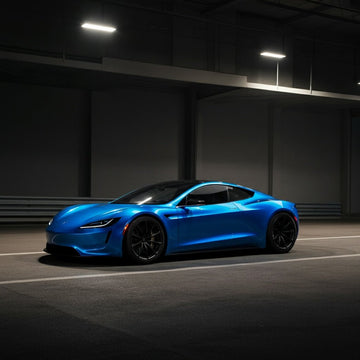
Tesla brevète une technologie aérodynamique de F1 interdite en course pour le Roadster de nouvelle génération
Tesla, le célèbre constructeur de véhicules électriques, a récemment fait la une des journaux en brevetant des technologies aérodynamiques avancées, initialement conçues pour la course de Formule 1. Cette innovation pourrait avoir un impact significatif sur les performances de son prochain Roadster de nouvelle génération, marquant une avancée audacieuse dans le domaine des voitures de sport électriques.
La technologie derrière le brevet
La technologie brevetée se concentre sur des caractéristiques aérodynamiques autrefois restreintes dans les courses compétitives en raison des réglementations. Ces caractéristiques incluent des systèmes innovants de gestion du flux d'air conçus pour optimiser l'appui et réduire la traînée, améliorant ainsi la vitesse et la maniabilité. Selon les documents de brevet de Tesla, la mise en œuvre de ces technologies pourrait entraîner une amélioration spectaculaire des métriques de performance du véhicule, rendant le Roadster de nouvelle génération non seulement plus rapide, mais aussi plus efficace.
Contexte de l'aérodynamique en Formule 1
Dans le monde de la Formule 1, l'aérodynamique joue un rôle crucial dans les performances d'une voiture sur la piste. La capacité à manipuler le flux d'air peut faire la différence entre gagner et perdre une course. Cependant, bon nombre de ces améliorations aérodynamiques sont restreintes en course de F1 en raison de mesures réglementaires strictes visant à assurer une concurrence équitable. La décision de Tesla d'intégrer ces technologies dans un véhicule de consommation soulève des questions intéressantes sur l'avenir de la conception automobile et des normes de performance.
Ce que cela signifie pour le Roadster de nouvelle génération
Le Roadster de nouvelle génération, très attendu depuis son annonce, devrait repousser les limites des performances des véhicules électriques. En utilisant une technologie dérivée de la F1, Tesla vise à atteindre des niveaux d'accélération et de maniabilité sans précédent. La combinaison de la puissance électrique et de l'aérodynamique avancée pourrait potentiellement permettre au Roadster de rivaliser avec certaines des supercars les plus puissantes du marché actuel.
Impact potentiel sur l'industrie automobile
Cette innovation pourrait établir une nouvelle norme pour le marché des véhicules électriques. Alors que Tesla continue de repousser les limites, d'autres constructeurs pourraient être contraints d'investir dans des technologies similaires pour rester compétitifs. L'intégration de technologies interdites en course dans des véhicules de consommation peut entraîner un changement significatif dans la façon dont la performance est perçue dans le secteur des véhicules électriques.
Points clés à retenir
- Tesla a breveté des technologies aérodynamiques avancées initialement conçues pour la Formule 1.
- Le Roadster de nouvelle génération est prêt à utiliser ces technologies pour des performances améliorées.
- Cette initiative pourrait influencer l'approche de l'industrie automobile en matière de performance et d'aérodynamique.
Conclusion
Alors que Tesla se prépare à lancer son Roadster de nouvelle génération, l'intégration de la technologie aérodynamique de la F1 pourrait révolutionner ce que nous attendons des voitures de sport électriques. Avec le potentiel d'une vitesse et d'une efficacité accrues, Tesla ne fait pas seulement remodeler sa gamme, mais établit également un précédent en matière d'innovation dans l'industrie automobile. La question demeure : comment les concurrents réagiront-ils à cette nouvelle référence ?
Selon les mots du PDG de Tesla, Elon Musk, « l'innovation distingue un leader d'un suiveur. » Alors que Tesla ouvre la voie vers l'avenir de la conception automobile, il sera fascinant de voir comment les autres constructeurs s'adapteront et innoveront en réponse.


